Showing posts with label Guest Blogger. Show all posts

Saturday, August 20, 2016

Turkey’s Aegean Hideaway: Your Guide to Alaçati

Today we are fortunate enough to have a guest post from blogger Jenny of 


Read about Jenny and her husband, Ian, as they use the world as their playground: 


About Jenny & Ian...


Jenny and her husband Ian are the travellers behind the A Taste of Travel blog. They are avid travellers who have been fortunate to visit many countries which they write about on the blog. A highlight of their travels was an eighteen month gap trip which meant they could spend a couple of months in one of their favourite countries, Turkey. Another couple of months was spent in Croatia island hopping and driving up the coast. This year they are about to head off on a four month trip which will take in Ireland, the Geek Islands, Italy, Portugal, Israel and Jordan. Jenny loves Instagram so you can follow their trip on the above social media accounts.


Alaçati is a Turkish town with a Greek history that today blurs the boundaries of both. It’s a popular place for both tourists and locals to enjoy lazy days by the beach and busy nights in the bars and restaurants that line the cobbled streets. This way of life appeals to us…We loved Alaçati and will definitely return.

Greece or Turkey?

History explains the conflict…


In the 1830’s a well known Turkish family reached out to the Greek families on nearby Chios Island whose homes and livelihoods had been destroyed by earthquakes and offered them work in the vineyards and olive farms. Alaçati was built on a swamp and malaria was thriving in these conditions, so the Greeks also helped build a channel to drain the swamp.

The workers set up a town…Alaçati, and built the traditional Greek stone houses that still remain today. With its fertile soils producing excellent vineyards and great wines, the town became and important trading centre and flourished until after the Balkan War in 1914 when Bosnian and Albanian immigrants came to Alaçati.  The Greeks started to leave.  In 1923 a formal ‘exchange agreement’ was signed returning the Turkish Muslims in Greece to Turkey and the Orthodox Greeks in Turkey to Greece.

Wooden houses, blue shutters and trailing bougainvillea in Alaçati


What to do in Alaçati


Explore the town

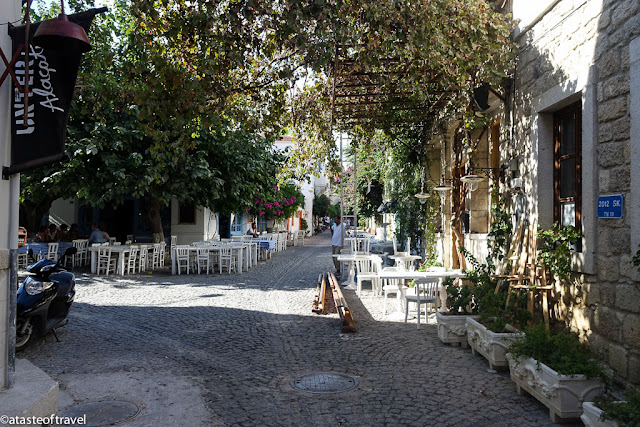
As you walk around the town, you really do feel as though you are in Greece. The old stone houses have been beautifully restored. Painted shutters and doors are covered in rambling bright coloured bougainvillea. Many of the homes have been converted to hotels whilst others are now trendy boutiques, bars and cafes.

Explore the side streets that run off Kemal Pasa Street, the main street of the town that is home to many of these bars and restaurants. Wander up to the 19th century windmills that overlook the town.


At the Town Square turn into the side street and head towards the mosque. Follow the winding street on the right hand side that will take you past two of Alacati’s best restaurants and into the Haci Memis Quarter. The old wooden homes and stone buildings have been restored and are now fabulous antique shops, interesting boutiques and busy cafes and bars.

Dinner at Asmi Yapragi is a must!

Aliçati’s boys club!

At night, the streets that were quiet during the day are busy. There’s a party atmosphere in town as people head to the bars and restaurants that spill onto the street.

One of the many bars in the town


The Saturday Market


Every Saturday the farmers market comes to town. Vendors come from far and wide bringing their locally grown produce to town. It’s large market. It takes over several streets in the town. The produce is some of the freshest produce I have seen, with sellers spending time proudly displaying their wares.  I watched one vendor as he hand polished each tomato and stacked it neatly on display. There’s also a textiles and clothing market at the back of the market but it is the fresh produce that most come for.


The Fish Market


The daily fish auction is fun to see. Fish caught overnight are bought to the market and expertly sorted into parcels of approximately one kilogram. These numbered lots are then auctioned off to the highest bidder. Go about 10.30 am to catch the action!

Go Windsurfing


Alaçati has been the home of windsurfing since the nineties and is now one of the most important windsurfing centres in the world. The strong winds that prevail here have bought windsurfers of all abilities to its shores. Don’t worry about bringing your board to Alaçati, windsurfers can be hired and lessons taken.


The Beaches


Being in the centre of the Cesme Peninsula, Alaçati is surrounded by the water. Its beaches are all are within easy reach. To the north is the sandy, Ilica Beach whilst beach clubs are found along the southern shores. Our favourite was Klum Beach Club where clear waters and a beautiful sandy beach encourage you to lounge all day on bean bags or rent a shaded waterfront bed.

Klum Beach Club

Wine Tasting at Urla


The Cesme Peninsula has become an important wine producing area again returning to the days when the Greek workers were cultivating the land. One winery not far from Alaçati is Urla Sarapcilik Winery, a stunning modern winery that produces award winning bio dynamic wines.


The discovery of vineyards over 1000 years old on his property motivated owner Can Ortabas to establish his own vineyards. Today Urla Sarapcilik Winery is one of the leading vineyards in Turkey.  The winery is a beautiful modern building with an ultra modern production plant. There is even a two room hotel in the building with stunning views over the vineyard.


Visit Ephesus


You may be heading down the coast but if not, a visit to Ephesus is not out of the question….you could be there in just under two hours! If this is your only chance to see this UNESCO listed site, you may want to take it! It took us about two hours to see the sights without a guide. Don’t miss seeing the Terraced Houses which require a separate payment. For us, they were the highlight of Ephesus.


Where to Eat


Two restaurants stand out from the crowd, both showcasing the fabulous produce that we saw at the markets but in different ways.
Asma Yapragi


The display of fresh produce sitting on a table outside the restaurant is more than enough to tempt you inside but the if you’ve done your research on eating in Alaçati you will also know that this is one of the best restaurants in town. We popped into make a booking and wanted to stay. Fresh local greens, peppers and eggplants were being chopped and diced….I couldn’t wait to try the dishes they were being cooked.

That night as we sat in the courtyard garden, the anticipation grew. I didn’t realise that we would be returning to the kitchen to choose our entree from the fabulous selection of meze dishes that now covered the table. Traditional cooking at its best.
Even though this was a meal in itself, once I had seen and smelt the slow cooked lamb, I knew I had to try it. I was not disappointed! A superb meal.

My only disappointment that was they were booked out for the following nights were were in Alacati. The restaurant is very popular, especially in summer so make sure you make a reservation well ahead of time.


Babushka


Since our visit to Alaçati, there is a third restaurant that I’d like to let you know about. Chef Olga Irez and her husband Özgür have opened a restaurant called Babushka. I met Olga and Özgür at Özgur’s family home in Sapanca where we spent a week with them and photographer David Hagerman visiting the local markets, cooking and experiencing her delicious food. Olga is an avid fan of using the fresh local ingredients and I’m sure the food at their restaurant is just as good.


Where to Stay


Tas Otel
The first of the boutique hotels, the Tas Otel opened its doors in 2001 and now there are over 100 hotels in the area.

The Tas Otel is still one of the best. Staying in this small boutique hotel is like staying in a private home. Infact this 120 year old stone building was once a private mansion. A peaceful garden surrounds the pool and the outdoor tables are the perfect place to sit and enjoy the afternoon tradition of tea and freshly made cake. The cakes are famous and all feature in the beautiful cook book that is waiting for you in your room. They were the reason I was back at the hotel by 5!


Saturday, May 7, 2016

How To Save For Your Travel Fund

Today we are fortunate enough to have a guest post from bloggers, Kieron & Lewis of thebackpackertravels


About Keiron & Lewis


We are two guys from the UK planning to travel the world who strongly believe that anyone can travel if they really want to. It doesn't matter where you are from, how much money you have or what experience of travelling you have, there is enough information and enough friendly helpful people in the world to help you.

Kieron (The Creative, Loud One) was born in South Wales in 1985 and grew up in Blackwood, South Wales where he lived until 2012.  Originally he was training to become a solicitor which he thought was his calling in life until he discovered how much desk work this involved!!


Lewis (The Sensible, Detailed One) was born in the South East of England in a town called Chatham. He grew up in Dartford for 19 years and has lived all over Kent and Essex since. He left school and worked in an office 


Follow them:
Online - www.thebackpackertravels.com
Email - thebackpackertravels@gmail.com
Instagram - @thebackpackertravels
Facebook - The Backpaker Travels


There is a lot of information and advice on the internet about how little money you need to travel.  This works for many people and could work for you too!  That being said, surely it is only an advantage if you have money in the bank to spend if you need or want to?

We plan to spend little and do and see a lot but we are also trying to save as much as possible.  If we end up bringing it all back with us, that can only be an advantage!

How much money do you need?

The are two ways of looking at this.  The first way is to work out what you want to do, how long you want to travel for and where you want to go.  In 99% of cases you can find out how much this will cost you before you even leave the house.  Add it all together and you have your target savings.

The second way of looking at this is working out when you want to travel and then working out how much you can save before you set off.  This will of course potentially limit what you can do, where you can go and the length of time you are travelling.

Neither of these are wrong, it is just different ways of looking at it.  Either way, you will need to be smart with your money!

Which ever method you choose, have a target and write this down.  When you write it down it will help you to focus on it.  If you are travelling with someone, make sure they know your target and challenge each other on this.  If you’re travelling alone, tell friends or family as they will soon remind you of it when you go to purchase those shoes you don’t actually need!

How to start saving!

If you are anything like us, the more you have saved, the more you want to save. But where do you start?

The first thing we did was print out 2 months’ worth of bank statements and performed two simple tasks.  The first was to look at every direct debit we had and simply cancelled the ones we didn’t need.  We noticed that we were spending a lot of money on rent and bills and with these costs, it would take us years to save.  We will cover this later in the blog.  The second thing was to work out where our money goes.  Simply create a simple excel spreadsheet, create a number of headings i.e. socialising, food shopping, eating out etc and start populating the spreadsheet with the average spend over the past 2 months.  This was a massive realisation for us!  We didn’t realise how much money we actually wasted!

Once you have completed the spreadsheet, you can then start looking for ways of saving money.  This can be simple things such as changing your barbers, I was paying £22 per haircut when down the road I can get it for £8.  It may not be as nice but that’s £14 every three weeks I can save which is £238 a year.  Swapping expenses lunches whilst at work for the dreaded packed lunch saves £500 in a year etc.

My biggest outgoing was going to watch the football either live or in a pub which always resulted in alcohol consumption and spending money.  Paying £20 to have this at home costs me £240 a year but saves me nearly £800 in a year. I could of course give this up but I need some enjoyment this year!

Moving out

This could be a hard decision for you.  We worked out that living in our own apartment was costing us over £2000 a month. That is a lot of money that we can travel a long way on.  Lewis’ parents kindly have allowed us to move in with them for the remainder of this year until we travel.  My family all live in Wales which doesn’t help when you work in South East England but I am very grateful to them for allowing us to move in with them too! With living on your own comes an array of belongings, junk and memories.  Having to sell everything has been tough but all helped towards our travelling fund and the way I look at it is that I had nothing 10 years ago before I moved out and so it can all be bought again.  Everything that was sentimental or had memories attached I decided to keep.  It started off as a memory box but has turned into a trunk!!

No more holidays sadly…

This was the toughest one of all the saving.  The thought of going 12 months without a holiday is tough but at the end of the day, we will be on “holiday” for a long time at the end of it.  We can’t justify spending hundreds of pounds on a week away when that will keep us going a month in Asia on food and accommodation.

No more alcohol

We quickly realised when doing the spreadsheet that we spent a fortune on alcohol.  This is an easy thing to cut out and make instant savings.  Switch your alcohol to tap water and you can save a lot of money if you drink like we did!  If you’re T total, this won’t save you anything sadly!

How to get the most out of your savings

Everyone knows that the interest rates are low and leaving your savings in a savings account will not amount to much.  Many banks have introductory offers for new customers and I would recommend doing your research.  We switched to Lloyds for their 5% introductory offer and put as much into this as they allowed.  We also shopped around for an ISA and got the same interest rate.  By doing this, you can spread your money around and get the most out of it.  The down side is you don’t see your money growing in one place.  If you are like me, seeing a large balance helps me to save more.  The way I resolved this was to keep a spreadsheet with the overall amount and that is what I focused on rather than the individual balances.

Top Tips….

Whenever you are about to spend money ask yourself “will I take or use this travelling?”.  If the answer is no, don’t buy it.  You will have less to store or dispose of when you eventually leave!

When you are spending money, don’t think about it at UK value, convert this into what it will get you when you’re travelling.  £10 isn’t a lot in the UK but in some parts of Asia this will fund 2 nights’ accommodation in a hostel.  That will help you to say no! I am always putting back cans of Redbull and sweets as this would pay for another night’s accommodation!

Saturday, April 23, 2016

How to Capture People You Don’t Know When Traveling

Today we are fortunate enough to have a guest post from bloggers, David and Anna Smith of  www.interfaceimages.com


About the Authors

David and Anna Smith are World travel and fine art photographers, Bloggers, photography and fabric arts workshop leaders, key note speakers and cruise ship guest lecturers. Visit their Interface Images to access their World Travel Photography Tips & Photo Adventures Blog, Celebrate the World Fine Art gallery and online photography classes. Blog subscribers get a free photo class.
© 2016 David and Anna Smith 


Local people add color and excitement to travel pictures so photograph them....an intimidating idea to many of us. When I judge images at photo competitions over 90% of the images are flowers, animals and mountains because they don't talk back to you. It is people and local culture who make the world photo rich and interesting so make every effort to capture them in their environment. Here are some tips to help you how.
A few tricks:
  • Let children pose themselves - they’re natural;
  • Say “Touch heads” if our subjects know each other and you will always get a smile and a laugh. 
  • Want a friend for life? - exchange contact info, send/email photos.
  • Using a digital Camera? The BIGGEST icebreaker by far is to show them the picture you took.  Everybody likes to look at themselves..

© 2016 David and Anna Smith


On Location:  Relax, study your site for interesting subjects, get people to be used to you and that you are a photographer with a camera and using it!  When you arrive at a scene for the first time you are like a rock falling into a still pond and causing huge ripples everywhere.  If you have the time, hang out, relax, sip a latte, let the "ripples" subside and others will soon get used to you.

Shoot around your subject, then move closer & SMILE.  Engage in friendly conversation (if you can in their language) “I love your hat” “Can you help me find ---?”  After establishing any type of relationship with your subject such as making a purchase, giving them a tip or simply chatting ask  “may I take your picture?” or if there is no common language, point to your camera then your subject with  a “may I?” gesture.  If there is a negative response – move on, there are billions of people in the world left to photograph.  The first poses are often stilted or unnatural - get your subject to hold and show you something or interact with others and plan on taking several shots to get a good one.  Come back later and try again, the second time your subject will be more natural and relaxed.

© 2016 David and Anna Smith


Be aware that different cultures react differently to foreigners and photographers.  Don't violate cultural or religious taboos on photo taking - research this before you arrive. Don’t feel obligated to tip unless you really want. Bring home town pins, flags, mementos to hand out. In high traffic tourist locales tips can attract amazing subjects dressed in local costumes for better images. I carry loose dollar bills in my pocket and willingly hand them out if a tip is requested. Give street performers a tip and you can take photos of them all day, like the following tango dancers in Buenos Aires.

© 2016 David and Anna Smith


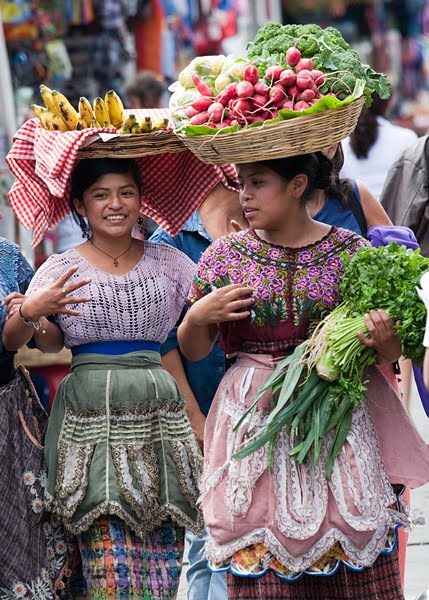
Street photography is a popular genre where subjects don’t know they are being photographed. Sometimes photographers are too shy to approach people so they shoot serendipitously or there is no opportunity to interact with your subjects before shooting. In a photo rich setting, watch and prepare for candid shots and practice your camera technique at home to be ready for that once in a life time opportunity, like this one of women fruit sellers in Antigua, Guatemala. David had 2 seconds to grab a shot before they turned down a lane and lost forever. 

© 2016 David and Anna Smith


I often use a fun group photo technique while traveling so BOTH the photographer(s) and the subjects can be in the same shot. I call this Dave’s Smile Circle and unlike selfies which are limited to a few people you can easily capture up to 10 people at once (depends on the camera lens and zoom out setting).  This technique works indoors or outdoors with smart phones, simple point and shoot or fancy SLR cameras..

© 2016 David and Anna Smith


Here’s how it’s done:

  1. Set the camera timer to about a 10 second duration. Look for the clock/timer symbol
  2. Force the flash on to lighten up the faces with the typical strong back lighting from the sky or overhead lights. Look for the lightning bolt symbol or pull up the popup flash (or use an external dedicated strobe flash set at ETL/ATL).
  3. Set the cameras focus method to multiple point or face detection. If left on the default center spot focus setting the camera will not focus on the faces but on the sky or background
  4. Set the lens to the maximum wide angle possible to fit all people in the shot
  5. Remove the lens hood, if any, as the wide angle lens setting will cause a shadow in the lower half of the image created by the light of the popup flash hitting the lens hood
  6. Place the camera on the floor/ground pointing up. Protect the camera led screen with piece of paper or cloth under it if necessary 
  7. Ask your subjects to gather round the camera facing down so their heads form a ring of faces over the camera. Ask them to touch heads. This always invokes laughter and merriment.
  8. Press the shutter button, and then join the ring and encourage the group to smile, laugh, making funny faces, etc. Remember the timer setting so don't have people laugh/giggle until just before the shutter goes.
  9. Check the shot for composition, smiling faces and retake as needed. Your subjects will totally enjoy the effect and willing participate in more shots.
  10. Show everyone the best shot and they will remember the event forever with a smile

No need to travel afar, watch for local festivals and special events.  When people get dressed up for parades and cultural festivals, they are really saying "take my picture".  Don't get there just for the parade - get there for setting up and post parade interaction. If you are on a tour be sure to photograph your traveling companions doing things, your tour guide and any local hosts or entertainment events.

© 2016 David and Anna Smith


Model releases are required if the image is used for commercial purposes (ads, corporate brochures/websites) but are not usually necessary if used for editorial purposes (travel stories, Blog or magazine articles). Check your local requirements. I carry model and product releases translated in the local language and have them signed if I am doing a commercial shoot locally or when traveling but not when I am just having fun with people I meet.

Remember -A memorable portrait is really a moment in time between a photographer and a subject and is an effective tool to get to know, experience and appreciate people and cultures around the world.

People photography adds human interest to Blogs, social networks, digital photo books and slide shows. Using the above techniques will help you take pictures of people you don’t know.


Saturday, April 16, 2016

See The World in Your Own Eyes

Today we are fortunate enough to have a guest post from blogger, Maruja of marujadventure.com

Copy and photos by marujadventure


People who have zero wanderlust in their blood often asked me... Why do I love travelling so much? Why do I love exploring this mother earth? Why do I spend all my energy and money when I can just Google it? I often tell them the world is so big and life is too short to limit yourself to all the cultures, food, and all the beautiful places that you can experienced. 

I always believe that in order for us to understand one another we must first experienced their culture. To live in it once and explored their life. In returned, we have a better understand of who they are. Travelling will open your eyes to other possibilities, but it will also show you some things you never knew about yourself. The strength to spread your wings and live outside your comfort zone. To try new ideas, new things, new food, and new cultures. 


So to those who have not travelled much. Travel as much as you can while your young and grab every chance you can to go on some adventure because maybe just maybe you will end up falling in love with one place you will end up staying. 
Big Sur, California
Photo: @marujadventure


Saturday, April 9, 2016

Advantages of Packing Light

Today we are fortunate enough to have a guest post from blogger, Alannah of www.itchyfeetravel.com 


Copy and photos by itchyfeetravel

Alannah has a serious case of itchy feet and incurable wanderlust! Originally from Canada, Alannah went on her first international trip at the age of fifteen to Paris France. Since then, her passion for travel and adventure has continued to grow. She has currently been to over 30 countries and lived in 3. She writes a travel blog where she shares her adventures and tips for travelling solo and travelling on a budget. 


11 Times I Seriously Regretted Packing Too Much Luggage


Before starting any trip, you must first complete the daunting task of packing. Whether packing is something you love to do, or it’s your least favourite part of travelling, it’s something that needs to be done.

Packing for me would always start out as something fun and then end in stress, and sometimes tears, when I realised that I couldn't possible fit everything I ‘needed’ into one suitcase.

If you’re like I used to be, packing light seems like an oxymoron. Every time you walk by your open suitcase you throw something else in. I used to pack way more than I needed to. The results were that I only ever wore or used about 40% of what I had packed.


During my last trip, I had the smallest suitcase out of everyone on the tour, whereas five years ago I would have had one of the biggest. What made me downsize and learn the importance of packing light (and that these two words actually can be used together) was the following 11 times I seriously regretted bringing too much luggage.

1) When you think you have around 20 lbs and the scale at the airport disagrees


You’re certain you are underweight but somehow, from the living room to the car you find that sweater you thought you had already packed. Running shoes that you haven’t used in a year but you just might need them because the urge to go for a run might hit you while you are on vacation. That magazine because what if the three you already packed are  not enough. That winter coat in the back of your car because there could be a freak snow storm. You arrive at the airport check in and are filled with dread as you lift your suitcase onto the scale. You stare at the red numbers that flash up, heart pumping just a little bit faster, praying that it will be under the weight limit.

2) When that extra couple of pounds ends up costing you a lot more than it’s worth


Your prayers go unheard and your suitcase is over the weight limit. This is not a good way to start a trip, you have not even checked into the airport and you are already faced with an extra cost. Airlines can be very strict when it comes to their baggage policies and even being one pound over can lead to an extra charge.

3) When you buy stuff that ends up putting you over the weight limit


A trinket here, a gift there. You don’t realise how much crap you've actually bought until you’re desperately trying to shove it all into your suitcase before your flight. If you manage to be underweight when you leave, but only by a little, you might not be so lucky on your way back home. Anything you buy on your trip will add weight to your suitcase and so you need to factor that in when you’re packing. Otherwise you might end up at the airport having to quickly decide what you are going to have to sacrifice and leave behind, or pay the surcharge for the extra weight.

4) When the underground station does not have a lift


Stairs might be an over packer’s worse nightmare. Sometimes the technology we rely on to make our life easier either does not exist or is not working. I have been to underground stations where there is no working lift and therefore the only option was to drag my suitcase up the staircase one step at a time. This is particularly difficult if there is a lot of people and particularly stressful if you are in a rush. The more stuff you packed, the heavier your suitcase, and a couple flights of stairs quickly turns into an intense workout.

5) When the handle or wheel on your suitcase decides to break


Both of these things have happened to me on separate occasions. I seemed to be cursed when it come to suitcases as they always seem to break on me at the worse time. It’s hard enough to haul around a big ass suitcase without some part of it breaking and making it even harder to pull.

6) When you’re trying to get on crowded public transport


If you have to take public transport to get to the airport, back home, or to your accommodation, then you face the struggle of trying to drag your huge suitcase into undergrounds, trains, and buses. This is made even more frustrating when public transport is packed and everyone is giving you dirty looks as you try to cram yourself and your suitcase into what little space is available, mumbling apologies as you try not to run over people’s feet. Once you've manage to cram yourself into the transport prepare for more dirty looks as people try to climb over and push past your suitcase, to get in and out, as you are unable to move the suitcase because there is no free space to move it to.

7) When you’re trying to walk down the streets of a crowded city


Trying to drag around a big suitcase in and around a lot of people is inconvenient and uncomfortable for them and you. This happened to me in Hong Kong as I was trying to navigate myself through the packed streets to find my accommodation.

8) When your accommodation is at the top of a hill


This happened to me in Monaco. I was already tired from travelling and wandering around for almost half an hour trying to find the hotel (was trying to save on money and therefore didn’t want to get a taxi).  Turns out my accommodation was on top of a huge hill. I was cursing my luggage the whole way up that hill. By the time I arrived to my accommodation I was grumpy, sweaty, out of breath, and ready to murder my suitcase.


9) No elevator or broken elevator


So you've finally managed to haul all your crap to your accommodation and now you’re feeling like the worse is over. Not so fast. It sometimes happens that your room is on the top floor of a building where the elevator is either broken or non existent and the only way to get your stuff to your room is to carry it up flight after flight of stairs. There are a lot of old buildings, for example in Europe, where there are no elevators and when your huffing and puffing up the fifth flight of stairs dragging an overstuffed suitcase you’ll be wishing you hadn't packed that 10th pair of pants.

10) Pulling out everything from your suitcase to find something then having to put it all back in.


The bigger your suitcase is, and the more stuff that you have, the more likely that you’ll have a hard time finding whatever it is you’re looking for. Having to pull all the contents out and then stuff them back in time and time again can get real old real fast.

11) When you’re at the end of your trip and realise you haven’t worn half the stuff you brought with you.


For me the worst part, after having to endure all these other things, is realising once the trip is over that half the stuff I had been dragging across the world I didn't even use. Packing light has always been a challenge for me, but after personally going through all the above during years of travel I decided something had to change.  When you’re packing for a trip, you really need to think about everything you put in your luggage and if it's really something you need.

Just remember, sometimes less is more!